and
and

and

and
 |
|||
|
Brought to you by:
|
and
and
and
and
|
January/February
2008
Reload
to see the latest news
 |
||||||||||||||||||||||
2.29.08
 >>A
surprise on the Sebring entry list is this Radical SR9 LMP1 entered by
Ian Dawson. What's even more notable is that the entry is powered
by an AER built V10 diesel engine. Apparently this is a case of AER
taking over the development started by Dawson of the diesel Volkswagen
Touareg V10 that he raced at Le Mans in 2004. We're currently looking
for more information from AER and Ian Dawson, in the mean time check out
dailysportscar's
very interesting write up of the project. >>A
surprise on the Sebring entry list is this Radical SR9 LMP1 entered by
Ian Dawson. What's even more notable is that the entry is powered
by an AER built V10 diesel engine. Apparently this is a case of AER
taking over the development started by Dawson of the diesel Volkswagen
Touareg V10 that he raced at Le Mans in 2004. We're currently looking
for more information from AER and Ian Dawson, in the mean time check out
dailysportscar's
very interesting write up of the project. |
||||||||||||||||||||||
| 2.23.08
|
||||||||||||||||||||||
| 2.16.08
Embassy is eventually aiming at bigger and better things and the project goes well beyond the design and manufacture of a LMP2 car. This project just happens to be the spring board. Ultimately the idea is to set themselves up as an engineering company along the lines of Prodrive. The LMP2 project allows them to control their own destiny (vs. being another customer to someone else) as well as launches their greater ambitions. |
||||||||||||||||||||||
 >>Race
Car Engineering sent use these shots of the WF01's build in progress. >>Race
Car Engineering sent use these shots of the WF01's build in progress. |
||||||||||||||||||||||
 >>The
rear end appears very slim and neat, one wonders where the oil tank is
located? Conventional coil springs are used at the rear. The
bellhousing is machined from billet and then anodized orange (as are the
engine mounting shear plates on the rear of the monocoque), a nice touch. >>The
rear end appears very slim and neat, one wonders where the oil tank is
located? Conventional coil springs are used at the rear. The
bellhousing is machined from billet and then anodized orange (as are the
engine mounting shear plates on the rear of the monocoque), a nice touch. |
||||||||||||||||||||||
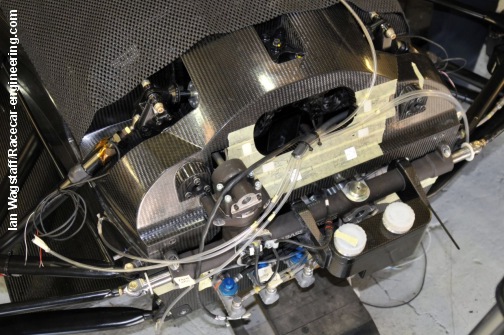 >>The
WF01's front suspension is torsion bar controlled. The bars can be
accessed from the front of the monocoque. It appears that the primary
dampers are on the other end of the bell cranks with their inboard mounts
attaching near centerline. >>The
WF01's front suspension is torsion bar controlled. The bars can be
accessed from the front of the monocoque. It appears that the primary
dampers are on the other end of the bell cranks with their inboard mounts
attaching near centerline. |
||||||||||||||||||||||
|
||||||||||||||||||||||
 The
WR LMP2008 has some interesting features. Starting with the side
pods, they are heavily undercut and vented. A vertical legality shadow
plate masks the side pods outboard as the undercut section encroaches inboard
past the 150 mm inboard legality limit. The black horizontal strake
at the rear of the side pod works as a shadow plate, shielding a segment
of the "valley" that opens up between the outboard vertical shadow plate
and the side pod as the side pod pinches inboard. Furthermore the,
the area between the valley then blends back up to the height underneath
the horizontal shadow plate. All very interesting interpretations.
For the time being it is difficult to ascertain what is occurring between
the front pontoon fender and the monocoque. Regulations mandate additional
shadow plates in this area in order to maintain a 400 mm height and this
is governed to a point 415 mm behind the front wheel centerline. The
WR LMP2008 has some interesting features. Starting with the side
pods, they are heavily undercut and vented. A vertical legality shadow
plate masks the side pods outboard as the undercut section encroaches inboard
past the 150 mm inboard legality limit. The black horizontal strake
at the rear of the side pod works as a shadow plate, shielding a segment
of the "valley" that opens up between the outboard vertical shadow plate
and the side pod as the side pod pinches inboard. Furthermore the,
the area between the valley then blends back up to the height underneath
the horizontal shadow plate. All very interesting interpretations.
For the time being it is difficult to ascertain what is occurring between
the front pontoon fender and the monocoque. Regulations mandate additional
shadow plates in this area in order to maintain a 400 mm height and this
is governed to a point 415 mm behind the front wheel centerline. |
||||||||||||||||||||||
 From
the front we can see the very large front splitter/diffuser. The
diffuser exit is directed at the bottom of the side pod into the area created
by the undercut on the side pod. The whole idea is to manage this
exit airflow as efficiently as possible maximizing the diffuser's performance.
It would appear that the front brake ducts are "Formula" style with the
ducting mounted directly to the upright and grabbing cooling air from inboard
openings in the front fenders. From
the front we can see the very large front splitter/diffuser. The
diffuser exit is directed at the bottom of the side pod into the area created
by the undercut on the side pod. The whole idea is to manage this
exit airflow as efficiently as possible maximizing the diffuser's performance.
It would appear that the front brake ducts are "Formula" style with the
ducting mounted directly to the upright and grabbing cooling air from inboard
openings in the front fenders. |
||||||||||||||||||||||
| 1.31.08
Program updates for 2008: >>Creation
The CA07 is on the 7-poster shaker rig next week. Further suspension and differential development is also planned. |
||||||||||||||||||||||
| >>AER
The 4.0 liter version of the AER P32 turbo V8 engine debuted at Petit last year with both Cytosport and Intersport and Mike Lancaster tells us that, from now on, the P32 will only be raced in 4.0 liter form. Work is continuing on the direct injection system and the decision will be made as to whether or not to introduce the development on both the P32 and MZR-R this year. There is a new version of the MZR-R for this year and it will be used by BK Motorsports in addition to a number of as yet unnamed European Le Mans Endurance Series teams. The P07 will continue to see use alongside the MZR-R though the eventual goal is for the MZR-R to supplant the P07. |
||||||||||||||||||||||
 >>Judd >>Judd
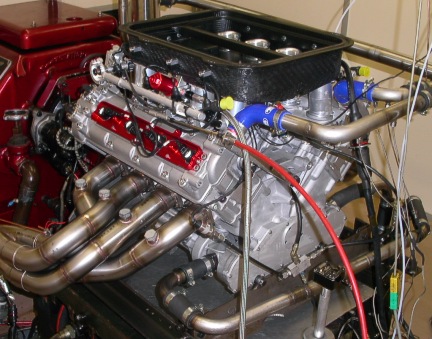
Judd's new DB 3.4 liter V8 LMP2 engine has run on the dyno. The engine shares similarities with the GV5 V10 LMP1 engine with it's head and block design though with a 90° 'V' angle (and minus two cylinders of course). One wonders if by default that it shares anything with the Judd designed AIM V10? The first engine will be out the door next week (Saulnier Racing) with Sebah's (Speedy) going directly to Lola for fitment (into Lola's LMP2 coupe) by the middle of this month (February). Stan Hall ends on this note, "So far the engine has gone very well, so we're very hopeful for the season!" |
||||||||||||||||||||||
|
||||||||||||||||||||||
1.24.08
 >>Audi
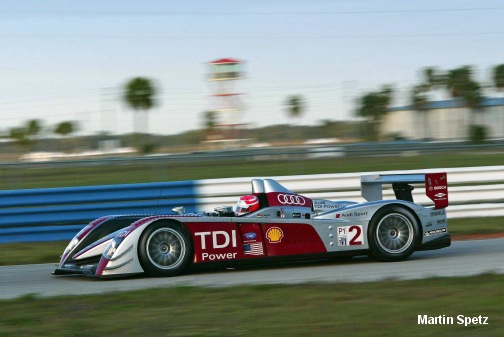
was out in force today at Sebring with two cars circulating. As we
understand it, they will be running multiple 12-hour simulations on the
run up to the 12 Hour. >>Audi
was out in force today at Sebring with two cars circulating. As we
understand it, they will be running multiple 12-hour simulations on the
run up to the 12 Hour. |
||||||||||||||||||||||
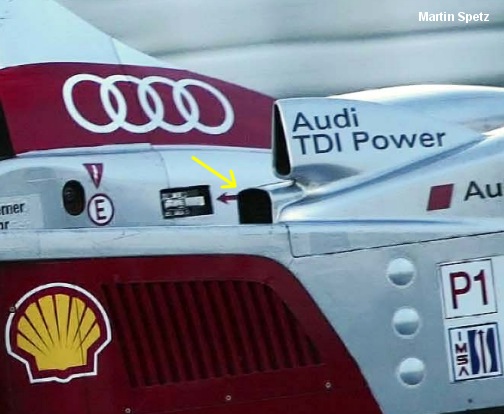 About
the only change we notice is a drastically enlarged rear brake duct (though
Sean Miller informs us they've been on the car since last year's Laguna
Seca, so not new at all). About
the only change we notice is a drastically enlarged rear brake duct (though
Sean Miller informs us they've been on the car since last year's Laguna
Seca, so not new at all). |
||||||||||||||||||||||
 Both
cars were wearing the No. 2 though could be differentiated by the Le Mans
2007 tech sticker on one and the ALMS stickers on the other. The
'07 Le Mans car had tire temperature monitors placed in the louvers above
each front wheel. Both
cars were wearing the No. 2 though could be differentiated by the Le Mans
2007 tech sticker on one and the ALMS stickers on the other. The
'07 Le Mans car had tire temperature monitors placed in the louvers above
each front wheel. |
||||||||||||||||||||||
| 1.23.08
|
||||||||||||||||||||||
|
||||||||||||||||||||||
 The
front wheel/diffuser exit has been opened up. Last year's gill-like
side shadow plate is still in place. The
front wheel/diffuser exit has been opened up. Last year's gill-like
side shadow plate is still in place. |
||||||||||||||||||||||
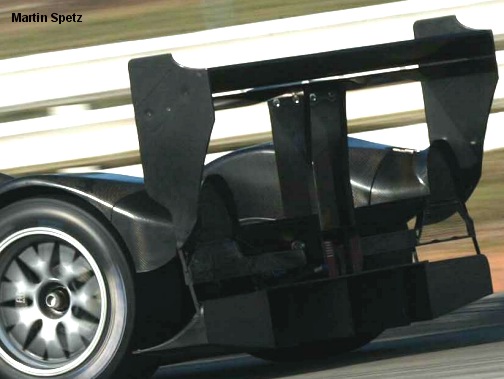 The
trailing edge of the rear fenders has been modified as evidenced by the
parting line and the new flared shape. The fenders may even be longer.
The endplate area has increased rather significantly though the trailing
edge has a somewhat arbitrary shape though no doubt born out of the wind
tunnel. The sideways 'u' at the top of the endplate was a mid season
development and so far is carrying over. The
trailing edge of the rear fenders has been modified as evidenced by the
parting line and the new flared shape. The fenders may even be longer.
The endplate area has increased rather significantly though the trailing
edge has a somewhat arbitrary shape though no doubt born out of the wind
tunnel. The sideways 'u' at the top of the endplate was a mid season
development and so far is carrying over. |
||||||||||||||||||||||
| 1.18.08
But let's back track for a moment to catch up on multiple birds and one stone, last month the ACO released the 2008 LMP regulations. For the most part changes were relatively minor but for one exception, the ACO added a "homologated engine" note to the LMP1 engine column. Previously there was nothing stopping someone from racing a GT1 engine in the back of an LMP1 chassis (Lister Corvette engine for example), but the regulations didn't encourage it given the draw back of the higher weight and design constraints of a GT based engine vs. the unlimited nature of bespoke racing power plants from Judd, AER, etc. But that has now changed and engines homologated for GT1 (production of 1000 units a year) are now recognized within the LMP1 engine regulations and given larger inlet restrictor for comparable engine capacity. For comparison, a 6.0 liter, multi valve bespoke LMP1 engine is allowed a 45.5 mm restrictor where as a GT1 homologated engine can used a 47.2 mm restrictor (46.6 mm base + .6 mm for over 12 cylinders). So that will mean more power from the GT1 engine in LMP application to make up for its deficiencies. Le Mans is a power circuit and such that faced with the prospects of having to lug around less ballast because of greater engine weight, you'd always take that hit if it meant 30 more horsepower. Team Charouz will be using the 6.0 liter V12 out of the Aston Martin DBR9 GT1 in their Lola B08/60 this season. |
||||||||||||||||||||||
| The
2008 LMP1 and 2 chassis
regulation highlights:
1.13 - Kinetic Energy Recovery
System (KERS): The ACO is currently studying specific rules for LMP1 which
will be equipped with a kinetic energy recovery system. This regulation
will meet the balance of performance between LMP1.
4.1 - Minimum weight : “LM”P1: 900 kg 925 kg last year “LM”P2: 825 kg 775 kg last year IMSA
announced under Bulletin 08-01 that they will keep LMP1 at 925 kgs and
move LMP2 to 800 kgs.
5.1- (1) Semi stressed engine, homologated in LMGT1 and used in a production car built in a quantity of at least 1000 units per year. (2) Semi stressed
engine complying with the “LM” GT2 technical rules and used in a production
car built in a quantity of at
(3) Engine using
head cylinders, valves, pistons, connecting rods of a production engine.
This engine must be used in a
(up to) 4400 cc
diesel engines allowed in LMP2
6.5 - Fuel Capacity : LMP2 :
One we missed from 2007 16.1 - Rollover structures : e.4 – For all the chassis homologated after July 1st, 2007, the main rollover structures and the secondary rollover structures must not obscure sight of any part of the engine (engine block and head cylinders), viewed from directly above the car. Would
seem to dissallow engines recessed into the rear bulkhead of the monocoque.
19.2 Reduction in performances LMP1 and LMP2 : The ACO is considering a reduction in
performances in LM P1 and LM P2 for safety reasons, given the fact that
the 3m 30s barrier was
"LE MANS" PROTOTYPE ("LM"P) Annexe 1 / Appendix 1 Inlet
restrictors for gasoline powered engines (turbo and normally aspirated)
have all been increased in diameter, see various tables
APPENDIX J - ARTICLE 258A - APPENDIX 2 2.2 Frontal absorbing structure Text
addition:
Text
addition:
|


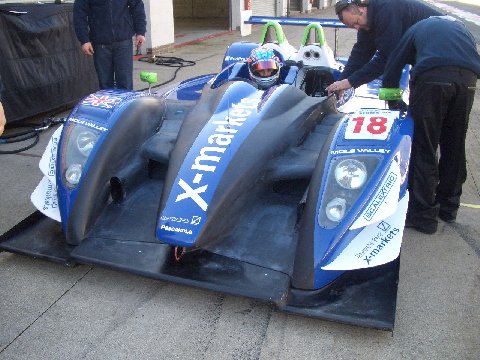 >>Martin
Shorts Rollcentre Team is continuing their development cycle hinted at
in
>>Martin
Shorts Rollcentre Team is continuing their development cycle hinted at
in  >>In
2008 UK based Embassy Racing will be fielding a LMP2 of their own design
and construction in the Le Mans Series. The announcement was made
many months ago and the car's construction is well along. Peter Elleray
is responsible for the car's design. The RUAG wind tunnel in Emmen
Switzerland was utilized, the same facility Elleray used for the Bentley
LMGTP. The engine is the 3.4 liter Zytek V8, the gearbox is Ricardo.
RTN is manufacturing the primary composites (and built and supported the
wind tunnel model). Alastair Macqueen is the the group's Technical
Director. So that's Elleray, Macqueen, RTN, Emmen...seems another
very successful project utilized that combination
>>In
2008 UK based Embassy Racing will be fielding a LMP2 of their own design
and construction in the Le Mans Series. The announcement was made
many months ago and the car's construction is well along. Peter Elleray
is responsible for the car's design. The RUAG wind tunnel in Emmen
Switzerland was utilized, the same facility Elleray used for the Bentley
LMGTP. The engine is the 3.4 liter Zytek V8, the gearbox is Ricardo.
RTN is manufacturing the primary composites (and built and supported the
wind tunnel model). Alastair Macqueen is the the group's Technical
Director. So that's Elleray, Macqueen, RTN, Emmen...seems another
very successful project utilized that combination 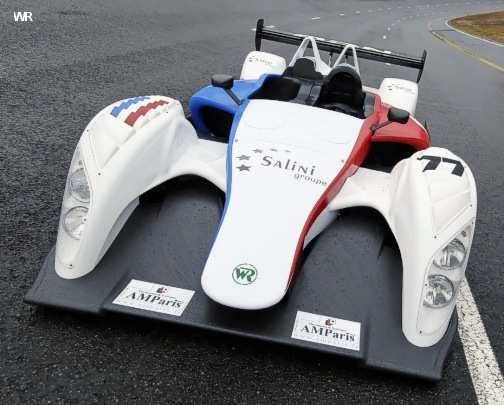

 >>M&S
>>M&S
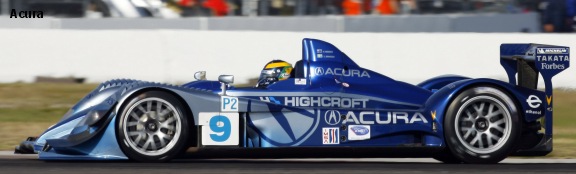
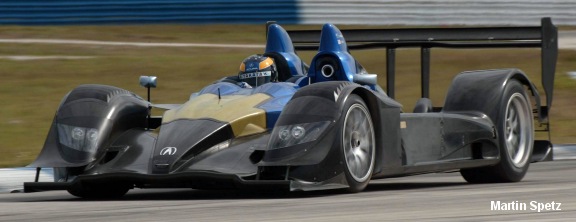 >>Acura
was out testing their updated ARX-01b spec LMP2 last week at Sebring (Jan
14-15). Many thanks to Martin Spetz for the use of these images.
>>Acura
was out testing their updated ARX-01b spec LMP2 last week at Sebring (Jan
14-15). Many thanks to Martin Spetz for the use of these images.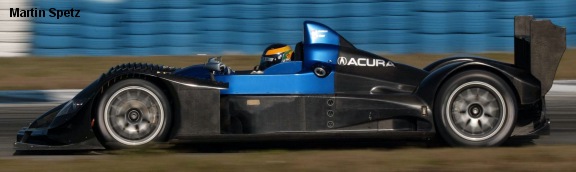
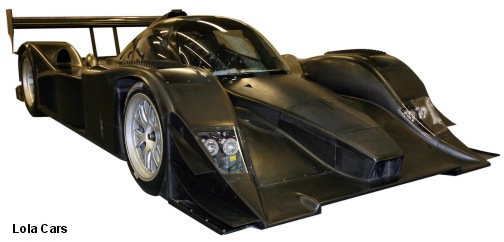 >>Big
news out of the last week's Autosport show is the release of the first
image of the Lola B08/60 LMP1 coupe coupled with news that Team Charouz
will be fielding an Aston Martin powered version this season.
>>Big
news out of the last week's Autosport show is the release of the first
image of the Lola B08/60 LMP1 coupe coupled with news that Team Charouz
will be fielding an Aston Martin powered version this season.