 The
long raised nose is the impact structure, this is mounted via 4 bobbins
to the front of the chassis the upper face is part of the aerodynamic shape
of the car, this requires a small panel to be attached over the access
hatch for the brake fluid reservoirs, which are very large and fabricated
in Alloy. The actual monocoque then begins, again the upper and raised
lower surfaces form part of the shape of the bodywork, the recesses either
side of the monocoque mount the pushrods and torsions bars. In order
to package the suspension on the tight space available, Bentley have opted
for torsion bars to “spring” the front suspension. Unusually the
torsion bars are mounted over the bell cranks which operate the horizontal
dampers via the inclined pushrod mounted to the lower wishbone. The
Dampers fit through an aperture on the side of the monocoque and both mount
to a common alloy fixing in the middle of the scuttle, this is accessed
via a small cut out in the scuttle. The extensions of the torsion bars
feature a right angled extension which passes inside the monocoque to an
undisclosed type of Antiroll bar. The upper and lower wishbones are
conventional and mount via rod end bearings to Alloy clevises fastened
to the chassis. The lower wishbones mount in the middle of the monocoque
under the raised area. The upper wishbone have later (not in this
image) featured an anti-intrusion bar across the wishbones inboard legs.
The steering rack is installed inline and forward of the upper wishbone.
The scuttle also has a small NACA duct to feed cooling air into the cabin,
inside the mouth of the duct the shaft to operated the windscreen wiper
can be seen
The
long raised nose is the impact structure, this is mounted via 4 bobbins
to the front of the chassis the upper face is part of the aerodynamic shape
of the car, this requires a small panel to be attached over the access
hatch for the brake fluid reservoirs, which are very large and fabricated
in Alloy. The actual monocoque then begins, again the upper and raised
lower surfaces form part of the shape of the bodywork, the recesses either
side of the monocoque mount the pushrods and torsions bars. In order
to package the suspension on the tight space available, Bentley have opted
for torsion bars to “spring” the front suspension. Unusually the
torsion bars are mounted over the bell cranks which operate the horizontal
dampers via the inclined pushrod mounted to the lower wishbone. The
Dampers fit through an aperture on the side of the monocoque and both mount
to a common alloy fixing in the middle of the scuttle, this is accessed
via a small cut out in the scuttle. The extensions of the torsion bars
feature a right angled extension which passes inside the monocoque to an
undisclosed type of Antiroll bar. The upper and lower wishbones are
conventional and mount via rod end bearings to Alloy clevises fastened
to the chassis. The lower wishbones mount in the middle of the monocoque
under the raised area. The upper wishbone have later (not in this
image) featured an anti-intrusion bar across the wishbones inboard legs.
The steering rack is installed inline and forward of the upper wishbone.
The scuttle also has a small NACA duct to feed cooling air into the cabin,
inside the mouth of the duct the shaft to operated the windscreen wiper
can be seen
The monocoque remains at the quite narrow
minimum size through out the length where the wishbones mount, from there
backwards the shape flares out more to reach around the cabin area.
The structural part of the monocoque does not form any part of the sidepods
which are bolted to the monocoque.
Under the raised nose of the car is the
front diffuser, the leading edge is formed by the nose bodywork and continues
as a separate piece of bodywork mounted to the monocoque, this part can
be clearly seen below the brake ducts (and their convoluted ducting pipes)
and features two fences each side to direct the airflow toward the outlets
behind the front wheels. In frontal view the top of this diffuser
is not horizontal but sweeps down from the centre. In this image
just beneath and behind front edge of the diffuser the regulation flat
bottom starts, this forms a splitter to separate the flow of air over and
under the floor. The squar’ish ducts either side of the windscreen
feed air into the water radiators, from the air flowing either side of
the nose. Beneath these the underside of the monocoque and the sidepods
are shaped to direct the remaining flow out behind the front wheels.
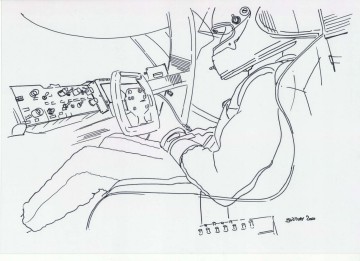 The
cabin is formed by the “roof” of the monocoque, which is formed homogenously
with the rest of the monocoque, the “roof” incorporates a composite rollover
structure and the aerodynamic shape of the roof. The permanent, structural
shape of the roof actually creates two humps above the drivers and passengers
heads (see the bare monocoque image), the roof scoop to feed the turbos
is a secondary piece of bodywork. The glass laminated windscreen
curves tightly around the cabin and despite the coloured “sunshield” strip
is as high as the scoop and reaches around as far as the door openings.
The
cabin is formed by the “roof” of the monocoque, which is formed homogenously
with the rest of the monocoque, the “roof” incorporates a composite rollover
structure and the aerodynamic shape of the roof. The permanent, structural
shape of the roof actually creates two humps above the drivers and passengers
heads (see the bare monocoque image), the roof scoop to feed the turbos
is a secondary piece of bodywork. The glass laminated windscreen
curves tightly around the cabin and despite the coloured “sunshield” strip
is as high as the scoop and reaches around as far as the door openings.
 The
bare moulding of the monocoque belies the aerodynamic shape of the nose
area of the car. The floor is raised well clear of the ground and
is heavily shaped underneath, forming a spine to mount the lower wishbones
and is swept outwards to wards the rear to feed the outlets behind the
front wheels. Bonded in at the moulding stage are various fixings
for suspension and bodywork mounts. The front bulkhead has one large
aperture to allow access to the steering track, Antiroll bar and pedals
and small aperture to the right for a multi-pin connector to provide power
to the front headlights. The roof is recessed in the middle to allow
for a lower larger scoop to feed the turbo compressors. Bentley have
decided to use a roof scoop over periscope type scoops in the sidepod tops,
as the roof scoop is very high and forward it should not interfere with
the flow to the rear wing. The rear bulkhead of the monocoque
forms the firewall between the cabin and engine bay, it has small “window”
cut out, this is blanked off when the car is assembled and affords the
driver no rear view, the window is used to route wiring for the Management
and data logging systems mounted in the passenger space in the cockpit.
To the side and not visible in this image is the door apertures these are
quite large square openings and are as low as the upper wishbone mounts.
The
bare moulding of the monocoque belies the aerodynamic shape of the nose
area of the car. The floor is raised well clear of the ground and
is heavily shaped underneath, forming a spine to mount the lower wishbones
and is swept outwards to wards the rear to feed the outlets behind the
front wheels. Bonded in at the moulding stage are various fixings
for suspension and bodywork mounts. The front bulkhead has one large
aperture to allow access to the steering track, Antiroll bar and pedals
and small aperture to the right for a multi-pin connector to provide power
to the front headlights. The roof is recessed in the middle to allow
for a lower larger scoop to feed the turbo compressors. Bentley have
decided to use a roof scoop over periscope type scoops in the sidepod tops,
as the roof scoop is very high and forward it should not interfere with
the flow to the rear wing. The rear bulkhead of the monocoque
forms the firewall between the cabin and engine bay, it has small “window”
cut out, this is blanked off when the car is assembled and affords the
driver no rear view, the window is used to route wiring for the Management
and data logging systems mounted in the passenger space in the cockpit.
To the side and not visible in this image is the door apertures these are
quite large square openings and are as low as the upper wishbone mounts.