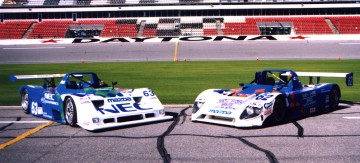
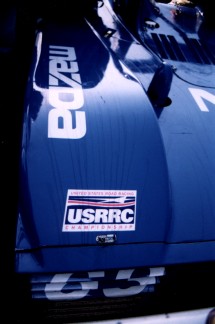
#62 Mazda-Kudzu DLM 3-Rotor
#63 Mazda-Kudzu DLY 4-Rotor
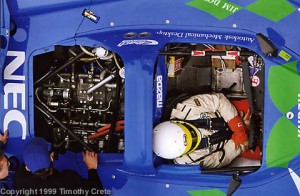
Text & images copyright Michael J. Fuller except where noted
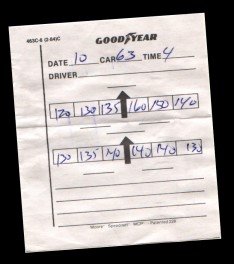 Didn’t
we just get through doing this? Seems just last week we were heading
into the Daytona International Speedway for the yearly Test Days.
But a year has gone by, the politics still suck, but we are still persevering.
Didn’t
we just get through doing this? Seems just last week we were heading
into the Daytona International Speedway for the yearly Test Days.
But a year has gone by, the politics still suck, but we are still persevering.
Fortunately this year there wasn’t nearly as much action as we had last year. No chasing rear wings and body work, etc. Thank fully so. As always, a new year and new challenges. This year’s challenge comes in the form of a new 4-rotor Mazda-Kudzu. The DLY debuted at the Petit Le Mans in October where it finished 6th overall. The car is essentially as run at Petit Le Mans and the Laguna Seca finale. Main notable difference being that the iconic periscope air box intake has been removed, the intake for the air box now is located in the right hand side oil cooler nostril. The Downing/Atlanta team participated in the December USRRC lighting test and it was found that the DLY was slower than anticipated on the straights (more about this later). The air box periscope was removed in hopes to reduce drag if not to simply reduce frontal area and also provide better flow to the rear wing. Engine guru Rick Engeman noted that air box pressure was the same with the new ducting as with the periscope alleviating worries that the thickening boundary layer might choke the intake.
 The
only new development on the DLM was that the six-speed box has finally
been replaced with a five-speed unit (the gear box itself isn’t replaced,
just five gears are put in place where six gears usually reside).
The six-speed box, with its thinner gears, has always been a source of
reduced reliability in the endurance races. Hopefully, with a standard
five gear 'box, mid race stops to repair the transmission will be a thing
of the past.
The
only new development on the DLM was that the six-speed box has finally
been replaced with a five-speed unit (the gear box itself isn’t replaced,
just five gears are put in place where six gears usually reside).
The six-speed box, with its thinner gears, has always been a source of
reduced reliability in the endurance races. Hopefully, with a standard
five gear 'box, mid race stops to repair the transmission will be a thing
of the past.
The main concentration of the weekend was setting up the DLY (with the DLM you put oil and fuel in it and run). As I mentioned before, it was noticed during the December USRRC tests that the 4-Rotor was slower on the straights than anticipated. One of the intents of the weekend was to evaluate a number of different aero pieces to try and find an increase in top speed. On Saturday things got off to a slow start, which was compounded when, after a full days running, and allot of head scratching, it was realized that one of the rear shocks had failed. The drivers had been complaining of a “serious oversteer“ that wasn’t reacting to normal chassis adjustments. After it was found that the shock was the culprit, the whole day had to be thrown out. Just in time as the night session was essentially rained out. It was at this odd time that the Konrad team decided to roll out their Lola. Go figure?
 Days
two and three were a little better. But still, a majority of the
time was spent fiddling with the mechanical setup (spring rates, ride heights,
shock settings, tire pressures), aero changes being an after thought at
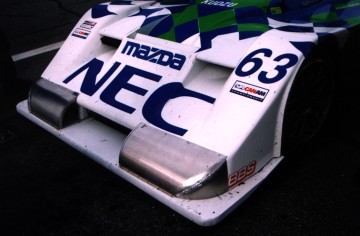
best. One of the pieces that we evaluated was a nose infill.
After only a few laps it was determined to have no effect on top speed
(positive or negative), but a detrimental effect on the lap times.
For reasons even to this point unexplained, the DLY’s wheel speeds were
an ultra anemic 171+ mph the first day, which improved to 178 mph (top
speed seen at the December test) Monday morning. None of the cosmetic
pieces seemed to have an effect on lap performance, and hence, will not
be incorporated into the race set up. Why the car isn’t going any
faster (top speed) now compared to at the test in December is any one’s
guess. Dave mentioned that the fastest time in December was a 1:48.xx.
Our fastest time this weekend was a 1:50.054. Conventional thought
would have the car going faster by the end of this second test session
based on starting the car with the final set up run just last month.
The only post test anomaly was a split airbox seam, so perhaps air box
pressure was down after all? But I hardly think that can attribute
to the whole two second differential.
Days
two and three were a little better. But still, a majority of the
time was spent fiddling with the mechanical setup (spring rates, ride heights,
shock settings, tire pressures), aero changes being an after thought at
best. One of the pieces that we evaluated was a nose infill.
After only a few laps it was determined to have no effect on top speed
(positive or negative), but a detrimental effect on the lap times.
For reasons even to this point unexplained, the DLY’s wheel speeds were
an ultra anemic 171+ mph the first day, which improved to 178 mph (top
speed seen at the December test) Monday morning. None of the cosmetic
pieces seemed to have an effect on lap performance, and hence, will not
be incorporated into the race set up. Why the car isn’t going any
faster (top speed) now compared to at the test in December is any one’s
guess. Dave mentioned that the fastest time in December was a 1:48.xx.
Our fastest time this weekend was a 1:50.054. Conventional thought
would have the car going faster by the end of this second test session
based on starting the car with the final set up run just last month.
The only post test anomaly was a split airbox seam, so perhaps air box
pressure was down after all? But I hardly think that can attribute
to the whole two second differential.
 We
were able to run a comprehensive oil drop test (to get an idea of air flow
over the car) on the final day of testing. It made for interesting,
yet still perplexing, reading. The flow seems well attached over
the rear haunches and around the brake periscopes. But the behind
the driver it is decidedly turbulent. You can clearly see the flows,
either side of the driver, rotating inward. At a point behind the
driver the air finally reattaches and continues on normally with nice streamlines
pointing the way. Really, with out wind tunnel testing, the source
of the disconcerting air flow is pure speculation, and until the car sees
the inside of a wind tunnel, will be unsolved.
We
were able to run a comprehensive oil drop test (to get an idea of air flow
over the car) on the final day of testing. It made for interesting,
yet still perplexing, reading. The flow seems well attached over
the rear haunches and around the brake periscopes. But the behind
the driver it is decidedly turbulent. You can clearly see the flows,
either side of the driver, rotating inward. At a point behind the
driver the air finally reattaches and continues on normally with nice streamlines
pointing the way. Really, with out wind tunnel testing, the source
of the disconcerting air flow is pure speculation, and until the car sees
the inside of a wind tunnel, will be unsolved.
I was finally able to get a look at the Lola despite being run off by the Konrad people. The Lola is interesting in that it is pulling all of its cooling air in from the underside of the car. The under side of the nose forms two diffusers which are aimed at and exhaust into openings in the side pods behind the front wheels. Architecturally the car is similar to the Ferrari. One theory is that by feeding intakes via the air flow of the under side of the car, you develop a low pressure “wake” as the air is “vacuumed” up into the cooler intakes. But then any number of different theories say that isn’t so, that it is best to leave a flat bottomed car just that, flat and unobstructed. It is interesting to note the two strakes, one either side of the brake ducts, traveling down the underside of the nose. Bet they generate a nice vortex producing a bit of additional downforce.
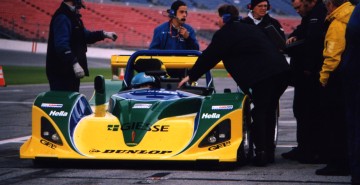 Ultimately
my opinion is that the Lola's cooling system is questionable considering
the high ambient temperatures seen at race tracks in the U.S. over the
course of the racing season. By utilizing air so close to the surface
of the race track, you are essentially delivering heated air to where you
don’t want it. And I might have been witnessing the Konrad Lola struggling
with cooling problems when I noticed that they were utilizing two access
holes in the nose. Considering this was during Sunday night’s very
cool temperatures it would be cause for concern. The car is very
well built and one to be admired. Lola has looked at engine bay air
flow and incorporated internal sculpting to smooth out the flow.
By sculpting the engine bay, two sponsons coming out of the undertray are
formed in front of the rear wheels. Konrad is using these sponsons
to form their airbox (which is feed via periscopes on top of the rear haunches),
which in turn feeds directly to the turbo charger. A very nice job
of packaging, topped off by the beautiful orange anodized cam covers of
the Lotus V8.
Ultimately
my opinion is that the Lola's cooling system is questionable considering
the high ambient temperatures seen at race tracks in the U.S. over the
course of the racing season. By utilizing air so close to the surface
of the race track, you are essentially delivering heated air to where you
don’t want it. And I might have been witnessing the Konrad Lola struggling
with cooling problems when I noticed that they were utilizing two access
holes in the nose. Considering this was during Sunday night’s very
cool temperatures it would be cause for concern. The car is very
well built and one to be admired. Lola has looked at engine bay air
flow and incorporated internal sculpting to smooth out the flow.
By sculpting the engine bay, two sponsons coming out of the undertray are
formed in front of the rear wheels. Konrad is using these sponsons
to form their airbox (which is feed via periscopes on top of the rear haunches),
which in turn feeds directly to the turbo charger. A very nice job
of packaging, topped off by the beautiful orange anodized cam covers of
the Lotus V8.
A final comment regarding the Lola. The word around the garage this weekend was that, while it is a beautiful, and no doubt fast car, will it be able to last a 24 hour event, or, how well will it last a season? You see, it is built like an Indy Car. That means, the parts have been designed right up to their performance threshold. Suspension bolts that are an 1 1/4 in diameter on say a Riley & Scott are 5/16ths of an inch on the Lola. The rumor is that was the main reason behind Dyson’s decision to not race it. Why would he want to go through the inaugural hassles developing a new race car like he did with the R&S? Let some one else be the Guinea Pig this time.
 The
Whittington R&S is interesting. The rear end has a slightly more
sculpted, less harsh look, with the spoiler notches being removed.
The air box has been redesigned, and now emulates the Ferrari’s *(Tim Crete
informs, "What they did was to make a mold of the airbox of a 333SP sitting
in the Aero Toy Store in Ft. Lauderdale. They chopped the whole center
section out of the R&S bonnet, and built the square opening that the
Ferrari airbox fits over"). Also, I noticed they did some running
with a single element wing. Looking to improve that straight line
speed for sure. The Support Net R&S was right up there on the
time sheets as well. Still a pretty conventional R&S.
It sported some smaller rear wing endplates (some what reminiscent of the
‘98 Williams F1 car front wing endplates).
The
Whittington R&S is interesting. The rear end has a slightly more
sculpted, less harsh look, with the spoiler notches being removed.
The air box has been redesigned, and now emulates the Ferrari’s *(Tim Crete
informs, "What they did was to make a mold of the airbox of a 333SP sitting
in the Aero Toy Store in Ft. Lauderdale. They chopped the whole center
section out of the R&S bonnet, and built the square opening that the
Ferrari airbox fits over"). Also, I noticed they did some running
with a single element wing. Looking to improve that straight line
speed for sure. The Support Net R&S was right up there on the
time sheets as well. Still a pretty conventional R&S.
It sported some smaller rear wing endplates (some what reminiscent of the
‘98 Williams F1 car front wing endplates).
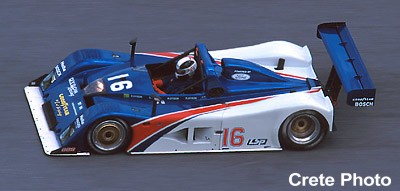 The
Dyson R&S is the most unique of the R&S breed. The differences
on the Dyson car center around the rear wheel arches. Dyson has done
away with the abrupt wheel arch that has characterized the R&S since
its inception, and replaced it with body work that connects the top of
the wheel arch smoothly with the side body work. One potential draw
back of this is that with a high line connecting the side of the car with
the top of the wheel, it may not allow for air traveling down the side
of the car to flow towards the rear wing. Instead the high body line
acts as a barrier and prevents air from spilling in and energizing the
flow towards the wing. But obviously Dyson is on top of its game
(and the time sheets), so they more than likely have had a good hard look
at the pros and cons and have gone with what works best.
The
Dyson R&S is the most unique of the R&S breed. The differences
on the Dyson car center around the rear wheel arches. Dyson has done
away with the abrupt wheel arch that has characterized the R&S since
its inception, and replaced it with body work that connects the top of
the wheel arch smoothly with the side body work. One potential draw
back of this is that with a high line connecting the side of the car with
the top of the wheel, it may not allow for air traveling down the side
of the car to flow towards the rear wing. Instead the high body line
acts as a barrier and prevents air from spilling in and energizing the
flow towards the wing. But obviously Dyson is on top of its game
(and the time sheets), so they more than likely have had a good hard look
at the pros and cons and have gone with what works best.
Times are down across the board due to the inception of air restrictors ala ISRS. Recalling from memory, the fastest time during last year’s test was a 1:39.low. So that puts everyone down around two seconds. Fortunately for us the rules don’t mandate restrictors for the rotaries. We tend to find the restrictors hinder the breathing of our rotary engines more so than the piston engines. One odd rules adjustment is that the all up minimum weight of the 3-Rotor has been increased to 1768 pounds, from 1600. This car has never been a pole qualifier so it seems odd to add weight to it.
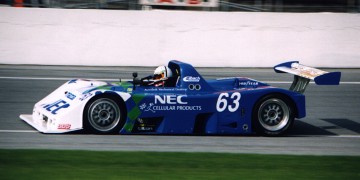 For
those of you who missed the bright orange flame that sprouted like an after
burner out of the 4-Rotor at the Petit Le Mans, you won’t be disappointed.
At night at Daytona you can see the entire exhaust system glowing, culminating
in a nearly white exhaust pipe shooting a lick of flame at least a foot
long out of the rear end. Its almost as though at maximum speed a
rotary is more like a jet engine than a piston engine. At night with
the exhaust system humming, it really is something to see.
For
those of you who missed the bright orange flame that sprouted like an after
burner out of the 4-Rotor at the Petit Le Mans, you won’t be disappointed.
At night at Daytona you can see the entire exhaust system glowing, culminating
in a nearly white exhaust pipe shooting a lick of flame at least a foot
long out of the rear end. Its almost as though at maximum speed a
rotary is more like a jet engine than a piston engine. At night with
the exhaust system humming, it really is something to see.
The field looks strong if not out right interesting. The clear favorites must be either one of the Dyson entries or the Doran entered Ferraris. As far as lap times are concerned, there is little to choose between the two. There are a lot of cars with the potential to win, but with the experience? We’ll know in two weeks.
