 The GTP ZX-T succeeded because of prodigious power coupled with prodigious downforce. The GTP ZX-T succeeded because of prodigious power coupled with prodigious downforce. |
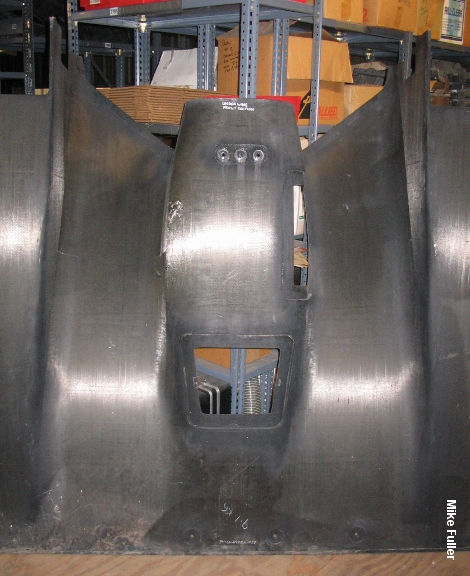 The
ZX-T's tunnels don't seem particularly special: the tunnel walls
are effectively parallal, opening up slightly at the leading edge (botom of image). The
ZX-T's tunnels don't seem particularly special: the tunnel walls
are effectively parallal, opening up slightly at the leading edge (botom of image). |
 Rear fender louvers. Rear fender louvers. |
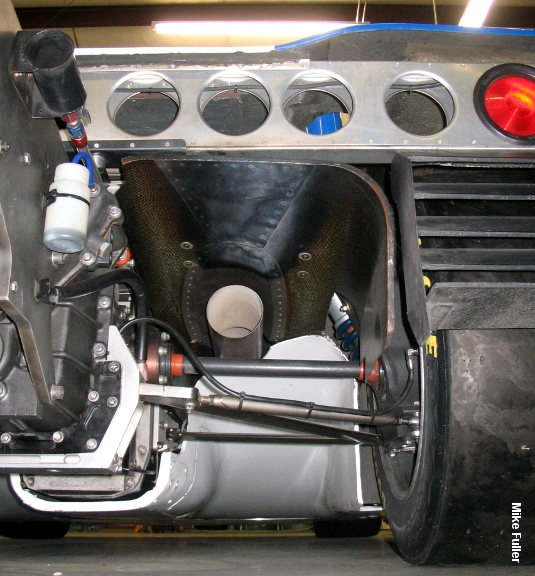 The
tunnel trailing edge height was unregulated in IMSA, so the idea was to
make the exits as tall as you could get away with. As a result,
top deck heights were much higher
than we're used to these days, but it was a direct reflection of the
importance of the tunnels and maximizing the tunnel exit height and
volume. The
tunnel trailing edge height was unregulated in IMSA, so the idea was to
make the exits as tall as you could get away with. As a result,
top deck heights were much higher
than we're used to these days, but it was a direct reflection of the
importance of the tunnels and maximizing the tunnel exit height and
volume. |
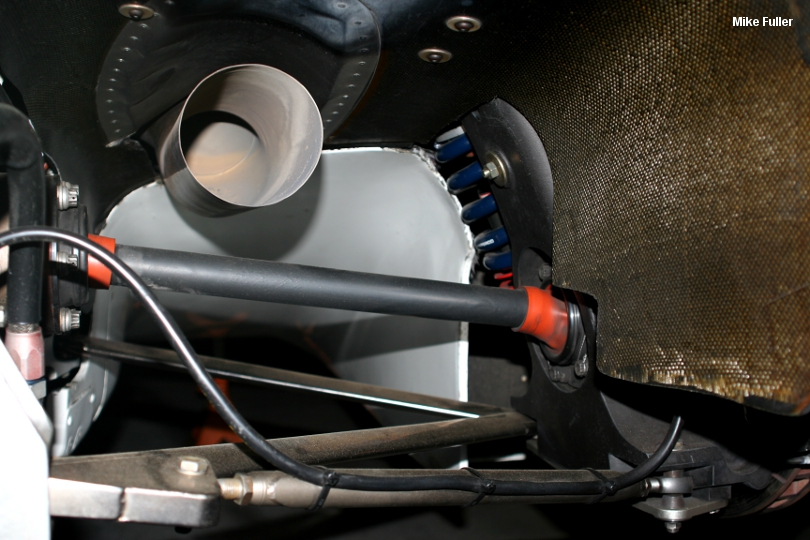 The
turbo exhaust on the GTP ZX-T was blown into the right hand diffuser
tunnel and allowed for a 93 lb. downforce increase for a 34 lb.
reduction in drag. Calculations showed a 1.7 mph speed
increase
on the back straight at Riverside and a .6 mph increase in cornering
speed in turn 9. Two other variants were tried that showed
increased downforce (for upwards of 108 lbs.) though without the
corresponding 30+ lb. drag reduction. The
turbo exhaust on the GTP ZX-T was blown into the right hand diffuser
tunnel and allowed for a 93 lb. downforce increase for a 34 lb.
reduction in drag. Calculations showed a 1.7 mph speed
increase
on the back straight at Riverside and a .6 mph increase in cornering
speed in turn 9. Two other variants were tried that showed
increased downforce (for upwards of 108 lbs.) though without the
corresponding 30+ lb. drag reduction. |
 The
spring/damper is mounted ahead and inline with the upright, pulling it
out of the air stream. Considering modern car's pushrod layouts,
the ZX-T's layout certainly appears old fashioned. But the rear suspension was designed to minimize its intrusion into the tunnel area. The
spring/damper is mounted ahead and inline with the upright, pulling it
out of the air stream. Considering modern car's pushrod layouts,
the ZX-T's layout certainly appears old fashioned. But the rear suspension was designed to minimize its intrusion into the tunnel area. |
 The cast
Magnesium upright on the ZX-T actually carried over from the
Lola-Nissan 810. Coleman brakes discs are mounted here though the Electramotive
would often utilize several different brands (AP, Tilton) depending on
the circuit. Note the integral brake cooling plenum cast into the
upright with the brake scoop bolted to the top (blue). The cast
Magnesium upright on the ZX-T actually carried over from the
Lola-Nissan 810. Coleman brakes discs are mounted here though the Electramotive
would often utilize several different brands (AP, Tilton) depending on
the circuit. Note the integral brake cooling plenum cast into the
upright with the brake scoop bolted to the top (blue). |
