
and
 |
|||
|
Brought to you by:
|
and
|
June
2006
Reload
to see the latest news
|
|
||||||||||||||||||||||
 |
||||||||||||||||||||||
| 6.21.06
The ACO's proposed 2010 regulation changes eliminate open top cars in LMP1, mandate a simpler body style and road car relevant styling cues, wider greenhouse, narrower rear wing (apparently matched to the width of the greenhouse ala GT1), and a call for higher ride heights. The B10/10 as proposed by Lola wouldn't meet those new regulations as we understand them (at this time the rules don't exist beyond a desire of a different direction by the ACO). And the ACO has stated (reaffirmed really) their desire for LMP1 to be for "Manufacturers". One wonders if Lola would be considered a manufacturer by the ACO? That distinction is especially important as the ACO calls for LMP1's styling to reflect the manufacturer's road car. Last I checked Lola, Dome, Courage, etc., didn't make road cars. Granted there is absolutely nothing wrong with closed top cars. But the ACO's maneuvering is very odd in that the current regulations are barely two years old yet they want to make massive changes. Fair enough that these changes are four years down the road, but certainly the potential exists to creating a four year transition period, not to mention elbowing the Cottage industry builders out of LMP1. We're just getting out of the LMP900 to LMP1 transition period. Why start a new one? |
||||||||||||||||||||||
| 6.18.06
>>How
does Audi do it? It comes down to the car that is able to run at
the higher percentage of their maximum speed (qualifying speed) and not
break will be the winner...sort of.
>>Audi R10 times, qualifying/race and difference between:
>>Pescarolo-Judd C60 times, qualifying/race:
But that only tells
some of the story. In reality the #17 Pescarolo car was raced much
harder than the above would suggest when you look at the average lap time
for each car across the 24 hours. Certainly this takes into account
pit stops, cautions, everything, and brings the teams into the comparison
and is calculated simply by taking the # of laps each car completed and
dividing by 24 hours (86400 seconds).
>>Audi R10 average lap time for 24 hours:
>>Pescarolo-Judd C60 average lap time for 24 hours:
And when you compare the average race lap times back again to qualifying, you see that the #17 Pescarolo was able to run as hard as the R10 in terms of its absolute speed. >>Audi R10 times, avg. race lap time, qualifying lap time, difference between, % avg. race lap is to qualifying time:
>>Pescarolo-Judd C60 times, avg. race lap time, qualifying lap time, difference between, % avg. race lap is to qualifying time:
It is pretty interesting when you look at the percentage that the #17 Pescarolo car was able to run of its maximum potential speed. In essence, for 24 hours, the #17 could run to within 92.5% of its qualifying lap time. But the one thing this analysis doesn't look at is the time length of the pit stops because the average lap time is literally the number of laps divided by the amount of time to complete that distance. Effectively it could mean that the R10 was run (slightly) harder in order to make up for slightly longer pit stops. Nor does this analysis take into account what actually occurred during the race. At one point the #17 Pescarolo was in the gravel trap. It isn't surprising that the drivers felt the need to make up for that indiscretion (and from the above numbers we can see that the certainly tried). Ultimately, though, it is clear the Audi R10 has plenty of performance in hand and used it to win and we could observe this even beginning with the Test Days. Pescarolo would be up top the time sheets and then the Audis would come out and best them (only just). And this went on and at the end of the Test it came down to timing (whoever was on the track when the session was finally over) and who wanted it more. It certainly behooved Audi to not completely show their hands. Then came qualifying for the race. Sure it looked close, and with the Pescarolo cars on top Audi responded with both cars posting times over 2 seconds faster than the Pescarolo's. That both Audis could post times so similar almost indicates that they were run to a program. I'd suggest that there was even more time in the R10 and it could have easily posted below the 3:30 mark. And in fact having a look through the official ACO timing and scoring from the event (available as a 134-page .pdf file covering every lap of the race, practice, qualifying etc.) you can see that if the #8 Audi's best sector times are added up they equal an "ideal" lap time of 3:29.248, better than 1.2 second quicker than either Audi was actually able to achieve (the ideal time for Pescarolo was a 3:32.183, only .401 off their best). We did not see the R10's maximum potential this weekend, and in '07 it will be further along in its development. But this year's Le Mans 24 was by no means a forgone conclusion. While the Pescarolo couldn't match the absolute speed potential of the Audi, the obvious question mark was simply how long could the R10 sustain its speed and maintain reliability. And with that it was imperative that Pescarolo run as hard as they could (even if they couldn't match the Audi's speed) in order to push them and to be in position to take positions should the Audis run into trouble. The race's complexion would have been very different if both, and not just the #7 Audi, had run into trouble. Pescarolo did just about everything they had to do but still came up short. And that's the deficit in the regulations, diesel to gasoline powered competitor, 4 laps at Le Mans. In 2007 it will be much more. Are the days over for the competitive gasoline powered entrant? |
||||||||||||||||||||||
|
>>Some comparative Audi data from past years: >>2000 Audi R8 times, qaulifying/race:
>>2001 Audi R8 times, qaulifying/race:
Average time difference, qualifying to race: 6.745 seconds >>2002 Audi R8 times, qaulifying/race:
>>2003 Audi R8 times, qualifying/race:
>>2004 Audi R8 times, qualifying/race:
|
||||||||||||||||||||||
 6.16.06 6.16.06
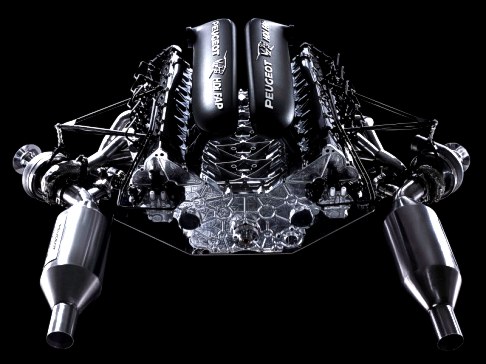
>>Today Peugeot announced details of their upcoming LMP project. The car will be called the Peugeot 908 and it will be powered by a 5.5 liter turbo-diesel V12. The Peugeot V12 HDi DPFS engine has a 100°cylinder angle to maximize center of gravity reductions while still maintaining good torsional rigidity. Peugeot claims 700 hp and 885 lb-ft of torque from the V12, a bit more than the quoted numbers for the Audi R10 (650 and 811 respectively). That should lend further credibility to the thought that the Peugeot 908 will be closed top (and therefore air conditioned, and therefore running a larger diameter engine inlet restrictor). The press literature also makes note that the V12's diesel particulate filters will be sourced from production line items though it would seem that the Audi is doing the same with the R10. Mark your calendars as on September 28th Peugeot will unveil a model of the 908 at the Paris Motor Show, on September 30th the V12 HDi engine will be first dyno tested, and in early December Eric Helary will be at the wheel when the 908 makes its testing debut. |
||||||||||||||||||||||
 6.15.06 6.15.06
>>Rene Verstappen sends us an update. Recall his story about his GRAC MT20 sports prototype. Rene has indicated that a MT20 (though not his own, but one which he did the bodywork for) will be running at the Le Mans Classic, July 7-9. According to Rene, "Some people have contacted me after they saw the article on your site. Rather some intresting people, like the nephew of the owner at the time. But as yet, no more info on the history of the car. There were some leads, and people with info on MT20s, but it stays unclear which car did Le Mans in 1974." |
||||||||||||||||||||||
 6.14.06 6.14.06
>>Sam Collins is continuing his reporting this week. Through his walks up and down pit lane he's come across some interesting tidbits and rumors even if some are just that and unverified (at the moment). >According to Sam talk is that the Pescarolo cars are running with air conditioning! Recall that the ACO made the regulations announcement regarding air conditioning back in December. The rule states that all closed top competitors will, starting next year, be mandated to run an A/C system and maintain a specific cockpit temperature. To compensate for the power loss, these competitors will receive a subsequent inlet air restrictor increase. Well the rumor is that the Pescarolo cars have an A/C system installed (the regulation recommends them for this year but doesn't mandate them until '07) and are running with the larger inlet air restrictor. What you say, the Pescarolo C60 Judd is open-top? Indeed. And apparently it points to the rather large loop hole in the A/C regulation if true because the rule doesn't disallow open top cars, just simply mandates the systems for closed top cars. Clearly an open top car could meet the cockpit temperature regulation without the A/C unit even running, so bingo, instant power increase do to the larger engine restrictor. Admittedly this is unverified, but certainly it should be a matter of taking a poke around the car? That is, if the Pescarolo teams allows it... >The rumor still persists of the Audi R10 being capable of a 350 km/h top speed, and having done it on the Mistral Straight during a private test at Paul Ricard. All this despite their 324 km/h posting (#8 Audi) at the Le Mans Test Days. >Another interesting tidbit indicates that the Audi R10's Shell diesel fuel is derived from coal extract and not petroleum. I have some doubts about this one inasmuch as the public relations coup is such that you'd think Shell would be shouting it from the roof tops. Obviously diesel fuel derived from coal extract would reduce dependency on petroleum and open up different (read domestic) suppliers for the production of energy. >There are claims that the Porsche RS Spyder has been extensivley reworked and that it can now lap Atlanta 1.5 seconds faster than before. Guess we'll find out at Petit? >And finally, the Lola B05/40s have sprouted a central third headlight, seemingly overnight! |
||||||||||||||||||||||
| 6.10.06
>>Audi's Ralf Jüttner took note of our Audi R10 update and issued a bit of a clarification. He tells us that chassis 101 has in fact been repaired though it was the plan all along to race chassis' 102 and 103 at Le Mans. Chassis 101 has done the bulk of post Sebring testing (30 hour Paul Ricard Test) and its duties aren't finished just yet being as it was on the Bugatti circuit on Wednesday for a video shoot. Ralf ends with, "Funny enough though, the race comes 3 months too early (as it does every year)." Even Audi isn't immune to the need for more time to prepare. |
||||||||||||||||||||||
6.9.06

>>While we have yet to create a dedicated page for the Lister Hybrid, I thought it appropriate to have a look at the front end evolution that has occurred over the past few months. The Lister is shown here photographed last year at the Racing Professional Motorsport Exhibition. The middle radiator is completely covered by an air diverter that ducts air into the radiators either side. Though the front end air management has evolved, and rather dramatically. |
||||||||||||||||||||||
 Shot
just this past week at the Le Mans Test, for all intents and purposes the
radiator arrangement is no different from the above. How the air
is ducted into them has changed drastically though. Shot
just this past week at the Le Mans Test, for all intents and purposes the
radiator arrangement is no different from the above. How the air
is ducted into them has changed drastically though. |
||||||||||||||||||||||
 The
new arrangement is almost completely opposite of the original setup.
The center inlet appears to duct air directly into the middle radiator
with the exhaust flow feeding the coolers to either side. A further
image sent in by Sam actually clarifies this a bit more. The inlet
is wide enough to feed the middle radiator, but residual flow also is directed
at the outer coolers. The
new arrangement is almost completely opposite of the original setup.
The center inlet appears to duct air directly into the middle radiator
with the exhaust flow feeding the coolers to either side. A further
image sent in by Sam actually clarifies this a bit more. The inlet
is wide enough to feed the middle radiator, but residual flow also is directed
at the outer coolers.
The Lister definitely struggled at the Test Day posting a rather slow 3:54.009 with a paltry 302 km/h top speed. Lister lost time with a damaged engine crank sensor amongst other issues and admittedly that limited their on track time somewhat. The team has also indicated that, "The car now has the downforce and we would work on adjustments to reduce the drag." But one might suggest that there isn't any setup that is going to grab back the 17+ mph deficit to the top running LMP teams. |
||||||||||||||||||||||
The radiaor
intake evolution:
|
||||||||||||||||||||||
| 6.7.06
>>Racecar Engineering's Sam Collins was in attendance at the Le Mans Test Days (and will be there for the next two weeks) and sends in this run down:
Audi's testing schedule was totally mucked up by Sebring, first by losing an engine during the race (chassis 2), then by McNish smashing up the car with 13 minutes to go in the post race test (chassis 101). These delays meant that Audi have been severely limited in testing pre Le Mans. Additionally, the third R10 had to be built in a hurry (chassis 103), so Le Mans will be a bit of an unknown. Both cars (chassis 102 & 103 --101 is not yet repaired) had small problems on test day. Audi were very interested in the JCB Dieselmax and Honda 067 Lakester articles in Racecar Engineering, could it be that the diesel engined R10 will be seen on the salt flats at Bonneville later this summer, after all the PR value of a diesel engined LMP doing 400 kph on the salt would be great - especially if they managed to beat the Honda F1 car's speed. Clearly a LMP would be better for it aerodynamically than an F1 car, and if the R10 ran un-restricted it could easily do it. Wolfgang Ullrich would not be drawn on this. Ian Dawson - D1
diesel Lola - this car is finally complete and was hoping to
run at Le Mans, however on its debut test at Snetterton
Another Japanese firm who want to remain nameless were talking about the arrival of a new (also Japanese) manufacturer at Le Mans and how they have been trying to get the deal to build and run the works cars, "it has been like meeting a beautiful woman, and trying to seduce her, you take her for dinner but she just smiles and you get no where near the bedroom, she teases you but you still want to take her to dinner again, well we have had a lot of dinners with her and now we are at the bedroom door" ...Read into that
what you will
Mazda - it
looks likely the Mazda are going to run a Hydrogen fueled Rotary engine
next year in a Lola, this will be the works team and is likely to be at
Le Mans. (Many skeptics on this side of the pond about this project.
Technical problems are apparently many, but not limited to, fueling issues,
power [lack thereof], and regulations. A good PR project for sure
given the state of petro-politics, but certainly the fundamentals need
to be addressed first?)
Lola - the Chamberlain-Synergy Motorsport B05/40 Lola that was rather comprehensively destroyed on Sunday is back in one piece today - in the same state as its sister car. Incredible work by the mechanics. Radical - finally the Rollcentre team have some painted bodywork - painted plain black but not yet on the car. |
||||||||||||||||||||||
 6.5.06 6.5.06
>>Here are a couple of shots of the ProTran RS06/H, taken at the Spa Le Mans Series race, prior to its opening lap crunch up. KW Motorsport's Kieron Salter indicates the damage wasn't as bad as appeared, and in fact being primarily bodywork and rear suspension. Kieron indicates that the gearbox, engine and tub are ok and that the car is currently being rebuilt. |
||||||||||||||||||||||
 |
||||||||||||||||||||||
 |
||||||||||||||||||||||
 |
||||||||||||||||||||||
6.1.06
 >>It
has been a few weeks since the debut of the KW
Motorsport Ltd. designed Creation CA06/H hybrid. It is
easy to look at this project as the simple conversion of the Creation DBA4
03S into a hybrid LMP1. But in the end nearly none of the bodywork
is common to the two. We caught up with Kieron Salter and he gave
us the low down on the car’s development and manufacture. >>It
has been a few weeks since the debut of the KW
Motorsport Ltd. designed Creation CA06/H hybrid. It is
easy to look at this project as the simple conversion of the Creation DBA4
03S into a hybrid LMP1. But in the end nearly none of the bodywork
is common to the two. We caught up with Kieron Salter and he gave
us the low down on the car’s development and manufacture. |
||||||||||||||||||||||
 On
first impression KWM’s task was rather straightforward. But since
they did not own the 3-D CAD surfaces for the Reynard 02S, the first order
of business was the reverse engineering of the 02S wind tunnel model (which
they do own). Scanning the wind tunnel model’s surfaces with a special
laser captured the car’s surface geometry. Typically the 3-D data
has to be cleaned up which can be a time consuming process but the result
is a comprehensive 3-D CAD file. Subsequently the wind tunnel developments
were created in 3-D and then applied to the model as the tunnel program
proceeded. On
first impression KWM’s task was rather straightforward. But since
they did not own the 3-D CAD surfaces for the Reynard 02S, the first order
of business was the reverse engineering of the 02S wind tunnel model (which
they do own). Scanning the wind tunnel model’s surfaces with a special
laser captured the car’s surface geometry. Typically the 3-D data
has to be cleaned up which can be a time consuming process but the result
is a comprehensive 3-D CAD file. Subsequently the wind tunnel developments
were created in 3-D and then applied to the model as the tunnel program
proceeded. |
||||||||||||||||||||||
 Aerodynamic
development of the CA06/H consisted of 8 days in the former-McLaren F1
rolling road wind tunnel facility in Teddington, Middlesex, UK. Kieron
Salter explains, "We contracted the aerodynamic skills of Ben Wood for
the aero development phase, Ben was our aerodynamicist on the original
02S design and has also assisted in the DBA development over the last couple
of years." The tests were broken up into four 2-day test segments.
The first 2-day test was spent bench marking the 02S and then applying
the modifications KWM have created for the Creation DBA4 03S over the course
of last season. This helped establish the target goals for the CA06/H. Aerodynamic
development of the CA06/H consisted of 8 days in the former-McLaren F1
rolling road wind tunnel facility in Teddington, Middlesex, UK. Kieron
Salter explains, "We contracted the aerodynamic skills of Ben Wood for
the aero development phase, Ben was our aerodynamicist on the original
02S design and has also assisted in the DBA development over the last couple
of years." The tests were broken up into four 2-day test segments.
The first 2-day test was spent bench marking the 02S and then applying
the modifications KWM have created for the Creation DBA4 03S over the course
of last season. This helped establish the target goals for the CA06/H.
The next series of tests consisted of the application of the minimum changes required to bring the car up to the current LMP regulations with the following tests involving various iterations all aimed at improving downforce and drag. Salter, “Aerodynamically the CA06/H is of course very different and responds to aero changes and setup differently and it has a bit more drag but similar levels of downforce so its L/D isn't as good as the previous 02S. However this is a function of the larger frontal area that affects all cars now so the relative disadvantage in this respect is negligible. The car is still very efficient and has very good levels of downforce without much pitch sensitivity so it is still currently a class leading design as the 02S was.” |
||||||||||||||||||||||
 Looking
at the CA06/H and it is easy to believe that the car is just an evolution
of the 02S. Ultimately this is true in the strictest of senses in
that the car began with the 02S wind tunnel model and developments were
created from that basis. But since KWM was always going to have to
machine new patterns and lay-up new molds to manufacture the CA06/H, every
carbon component was redesigned, as needed creating a bespoke car.
And KWM had the luxury of making these changes while in the CAD stages
without having to be concerned about using or modifying existing pattern
work or molds, regardless of the modification (how ever subtle).
The major cost was always going to be the same as the patterns and molds
didn’t exist, so every item might as well be optimized to the design parameters. Looking
at the CA06/H and it is easy to believe that the car is just an evolution
of the 02S. Ultimately this is true in the strictest of senses in
that the car began with the 02S wind tunnel model and developments were
created from that basis. But since KWM was always going to have to
machine new patterns and lay-up new molds to manufacture the CA06/H, every
carbon component was redesigned, as needed creating a bespoke car.
And KWM had the luxury of making these changes while in the CAD stages
without having to be concerned about using or modifying existing pattern
work or molds, regardless of the modification (how ever subtle).
The major cost was always going to be the same as the patterns and molds
didn’t exist, so every item might as well be optimized to the design parameters.
But the changes to the CA06/H didn’t just occur to the bodywork. Mechanical modifications were carried out as well. Ian Smith, Creation’s Chief Engineer oversaw the installation of the Judd GV5 V10 that required a new bellhousing, A-frames, engine mounts, exhaust system, and airbox. Suspension and uprights were strengthened at all four corners. Interestingly the new bellhousing is machined from solid billet. Kieron Salter again, “The bellhousing is 3D Solid modeled and comes in at similar weight to the original (Reynard) cast bellhousing and incorporates the oil tank as before plus the clutch release mechanism, credit to Ian Smith who designed this component among many other mechanical parts, including the engine mountings and A-frame mountings. The machined bellhousing is a very nice component and doesn't suffer any imperfections that castings do that may cause failure.” And machining the bellhousing from a (rather large) lump of billet aluminum is ultimately a more cost effective way to produce the part. |
||||||||||||||||||||||
 In
addition to the Ricardo gearbox and the air jacks, the only other lumps
to carry over from the 02S/DBA4 03S are the monocoque and crash structure
(nose box). And these items cannot be modified, as that would void
the original Reynard crash test certificate for the car. Hybrids
need only to comply with regulations in regards to aerodynamic blockage
and the CA06/H indeed only has a faux secondary structure to meet the requirement.
This means that the CA06/H has a limited life span in light of the new
LMP tub regulations, as it does not meet the requirement for a load carrying
secondary roll over structure for the passenger much less the increased
crash test standards (and hybrids are only legal until the end of this
year). But as Kieron Salter indicates, “We have started the design
of a replacement monocoque and nose box that will allow the car to be upgraded
to full LMP1.” In
addition to the Ricardo gearbox and the air jacks, the only other lumps
to carry over from the 02S/DBA4 03S are the monocoque and crash structure
(nose box). And these items cannot be modified, as that would void
the original Reynard crash test certificate for the car. Hybrids
need only to comply with regulations in regards to aerodynamic blockage
and the CA06/H indeed only has a faux secondary structure to meet the requirement.
This means that the CA06/H has a limited life span in light of the new
LMP tub regulations, as it does not meet the requirement for a load carrying
secondary roll over structure for the passenger much less the increased
crash test standards (and hybrids are only legal until the end of this
year). But as Kieron Salter indicates, “We have started the design
of a replacement monocoque and nose box that will allow the car to be upgraded
to full LMP1.”
So it will be possible to convert the CA06/H hybrid to full LMP1 specification with the replacement of the monocoque and nose box. And the Creation CA06/H will available to customers, “We have approached the design and manufacture of parts in the same way Reynard or Lola would, to be able to remanufacture adequate parts for spares supply or new cars,” explains Salter. The ability to produce multiple copies turns the corner for the Creation hybrid design, separating it from being “merely” a massaged Reynard 02S kitted up to hybrid LMP regulations. The CA06/H is also a showcase for KWM’s expertise (as well as the Nasamax DM139 and ProTran RS06/H), and they are now well placed to slot into the vacuum created when Reynard disappeared from the scene. |


 >>on
the heels of the ACO's proposed 2010 regulation changes to LMP1 (Friday
of last week) comes Lola's unveiling of an artist's rendering of the long
rumored closed top B06/10. The car is called the Lola B10/10.
" We have been evaluating the coupe version of our prototype for some time
now and are confident that it will be a very interesting project for existing
customers and potential customers," said Julian Cooper, Head of Engineering.
"We are spending more wind tunnel time in the near future and pushing ahead
with developments as we have already had a few enquiries relating to a
closed top version of the existing LMP1. It is obvious that the ACO
are aiming to attract more manufacturers to Le Mans in the future and we
will be ready to offer a package that has been exhaustively tested and
developed."
>>on
the heels of the ACO's proposed 2010 regulation changes to LMP1 (Friday
of last week) comes Lola's unveiling of an artist's rendering of the long
rumored closed top B06/10. The car is called the Lola B10/10.
" We have been evaluating the coupe version of our prototype for some time
now and are confident that it will be a very interesting project for existing
customers and potential customers," said Julian Cooper, Head of Engineering.
"We are spending more wind tunnel time in the near future and pushing ahead
with developments as we have already had a few enquiries relating to a
closed top version of the existing LMP1. It is obvious that the ACO
are aiming to attract more manufacturers to Le Mans in the future and we
will be ready to offer a package that has been exhaustively tested and
developed."


 Audi
- their soot/particulate exhaust filter is smaller and lighter and is now
being developed for use on road vehicles, real tech transfer stuff.
Its part of the reason the car is so quiet. Audi switched filter
suppliers 8 weeks before Sebring due to problems with the original unit
(and would more than likely explain the observations
Audi
- their soot/particulate exhaust filter is smaller and lighter and is now
being developed for use on road vehicles, real tech transfer stuff.
Its part of the reason the car is so quiet. Audi switched filter
suppliers 8 weeks before Sebring due to problems with the original unit
(and would more than likely explain the observations 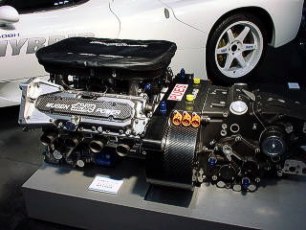 Honda
- are investigating, via Mugen, an electric Hybrid LMP1 engine, based around
the MF408 engine. The test engine (image left) has been run in a Vemac
Super GT car.
Honda
- are investigating, via Mugen, an electric Hybrid LMP1 engine, based around
the MF408 engine. The test engine (image left) has been run in a Vemac
Super GT car.