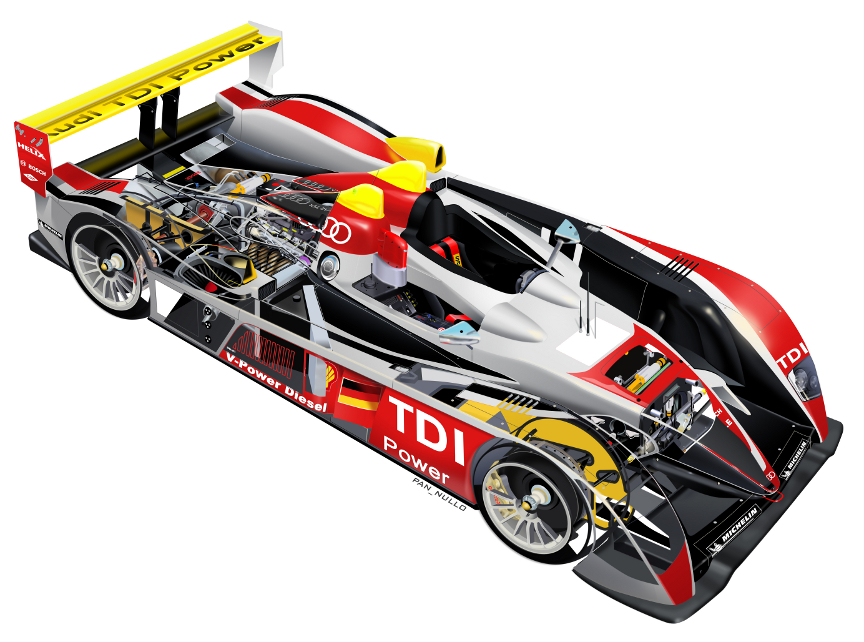
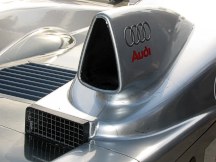
Much
has been made about the Audi R10's diesel power plant. The
technical
task that Audi has undertaken should not be underestimated and it is
such
an endeavor that only a well honed (and well funded) manufacturer can
tackle.
But Audi's design methodology is such that it is counter intuitive to a
successful program. The English/Italian paradigm for chassis
manufacturing
typically has engineering and manufacturing all under one roof
with the usual utilization of outside suppliers as needed.
Audi
Sport does things a little differently starting with the fact that they
do not have any chassis manufacturing capability in and of
themselves.
All design work for the R10 is done at Audi Sport though Audi routinely
subcontracts some design and drafting duties to an in-house consultancy
called BTZ. The R10's aerodynamics were first developed at
Audi Sport
in CFD, fleshed out in Fondtech's scale wind tunnel in Italy, and then
finally
fine-tuned in full scale at the Audi Wind Tunnel Centre back in
Germany.
Italian race car manufacturer Dallara builds the R10’s monocoques and
additional
suppliers located throughout Europe provide everything from related ECU
components to bodywork, granted all of which has been designed to Audi
Sport specification and from Audi Sport CAD/CAM files. The
car is
then assembled at Ingolstadt.
Much
has been made about the Audi R10's diesel power plant. The
technical
task that Audi has undertaken should not be underestimated and it is
such
an endeavor that only a well honed (and well funded) manufacturer can
tackle.
But Audi's design methodology is such that it is counter intuitive to a
successful program. The English/Italian paradigm for chassis
manufacturing
typically has engineering and manufacturing all under one roof
with the usual utilization of outside suppliers as needed.
Audi
Sport does things a little differently starting with the fact that they
do not have any chassis manufacturing capability in and of
themselves.
All design work for the R10 is done at Audi Sport though Audi routinely
subcontracts some design and drafting duties to an in-house consultancy
called BTZ. The R10's aerodynamics were first developed at
Audi Sport
in CFD, fleshed out in Fondtech's scale wind tunnel in Italy, and then
finally
fine-tuned in full scale at the Audi Wind Tunnel Centre back in
Germany.
Italian race car manufacturer Dallara builds the R10’s monocoques and
additional
suppliers located throughout Europe provide everything from related ECU
components to bodywork, granted all of which has been designed to Audi
Sport specification and from Audi Sport CAD/CAM files. The
car is
then assembled at Ingolstadt.
This methodology is nothing new to Audi as it was in place throughout the R8 years. That it has been successfully applied to the R10 (a car that is arguably a percentage fold more complicated) is a testament to the methodology though also perhaps to Audi's budget expenditure.
Audi obviously took a risk heading down the diesel route, the technical challenge is immense but then it comes with many readily obvious performance advantages over gasoline-powered competitors, so their decision to go diesel certainly doesn't give them many sleepless nights inasmuch as once the technical hurdles are cleared (and given their 2006 debut Sebring win one must say one large one has been). Can too much be made of the car's diesel engine? No, it is an interesting concept, and well executed, and for now has breathed a bit of fresh air into sportscar racing's relevance to the world.